




This article contains spoilers for the series finale of “Game of Thrones.”
The Iron Throne, the literal seat of the Westeros monarchy, is finally gone, melted down in the “Game of Thrones” series finale on Sunday by dragon fire. No longer will it beckon to those who want to play the dangerous game of thrones, even if it corrupts or kills them.
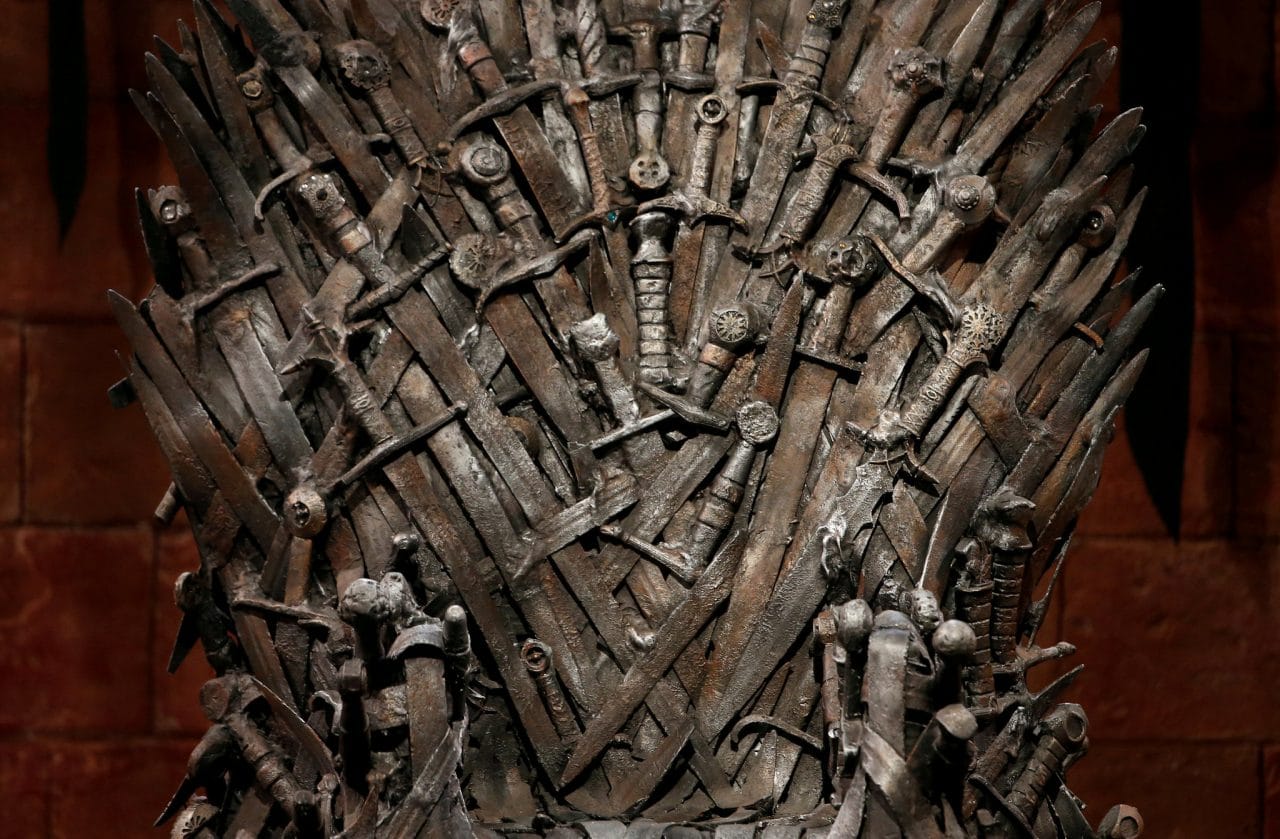
Perhaps it was a good judge of character. Or at least a good judge of cruelty. A monstrosity of a chair, it was made of the twisted steel and jagged ends of swords of vanquished enemies. Historically, when a monarch sat on the throne and it sliced his or her flesh, that monarch was often believed to be unfit to rule.
We never saw King Robert sitting on the Iron Throne. Ned did so only once, and seemed to squirm. Joffreytried the throne a few times, and he seemed to enjoy it. Tommen, on the other hand, looked very ill at ease.
Cersei seemed right at home on the cruel chair. And Dany wanted it enough to kill thousands of innocent people for it (and she still believed in the fairy tale of Aegon’s Conquest and her family’s sordid history right up until the very end).
Littlefinger and Varys once marveled at its back story together. “A thousand blades, taken from the hands of Aegon’s fallen enemies, forged in the fiery breath of Balerion the Dread,” Varys said.
“There aren’t a thousand blades,” Littlefinger responded. “There aren’t even two hundred. I’ve counted.”
For Littlefinger, the oft-repeated lie about the throne’s origins represented the illegitimacy of the realm itself. “Do you know what the realm is?” he said. “It’s the thousand blades of Aegon’s enemies, a story we agreed to tell each other over and over till we forget that it’s a lie.”
Dany imagined that the throne would be a “mountain of swords,” more aligned with the vision George R.R. Martin describes in the books. Still, her belief in the fairy tale over the harsh reality of Aegon’s Conquest and the subsequent Targaryen rule only proves she wasn’t fit for the chair, either. Perhaps no one was.
With Maegor the Cruel, who earned his sobriquet with a bloody reign of terror, it was said that the throne killed him. One night, he stayed late in the council chamber, brooding; the next morning, he was found dead on the throne, his arms slashed open by its many swords, his robes soaked in blood.
(Excerpt) Read more in: The New York Times


