The year was 1984. Oprah Winfrey was making her way to the Hotel Bel-Air for the first time. As she weaved up Stone Canyon Road, the once impoverished talk show host from rural Mississippi was mesmerized by the opulence tucked behind towering gates.
“It’s the first time that I actually realized how rich white people really lived,” she says. Being able to see it, firsthand, was transformative. “Just recognizing that there is another way of living let me know that that is possible.”
Her series of aha moments continued. The following year, Winfrey arrived at the offices of Steven Spielberg, for whom she made her film debut in The Color Purple. The role earned her an Oscar nomination and an invite to his Amblin headquarters in L.A. Until that moment, Winfrey had no idea, she says, that “you could have your own studio.”
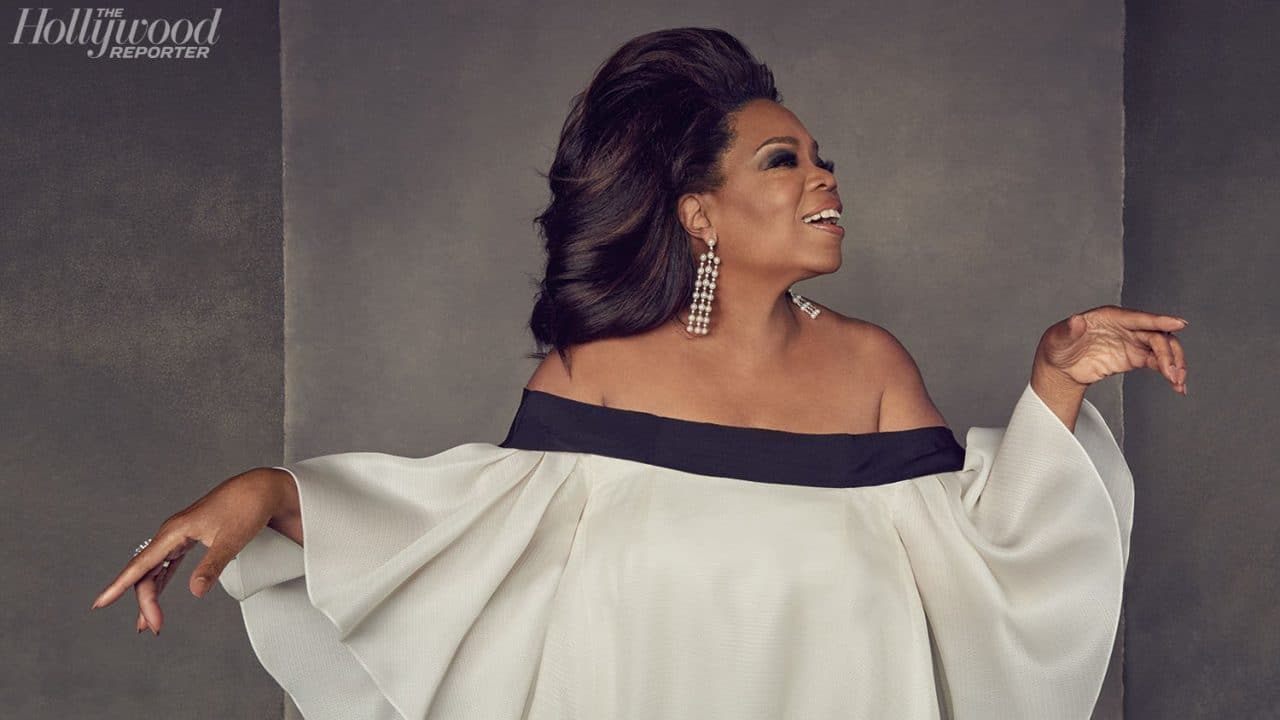
More than three decades later, Winfrey is a self-made billionaire (Forbesestimates her net worth at $2.8 billion) with lavish homes tucked behind gates and, yes, her own studio. She has a TV network, too, along with an eponymous magazine and a megadeal with Apple that will include a book club, documentaries and — she teases here — a potential series that would put her back in the interviewing chair. She’s also parlayed her iconic status into opportunities to educate and inspire worldwide. “I want to leave this planet being able to say, ‘Caused no harm, did a lot of good,’ ” she says.
As Winfrey, 65, prepared to receive The Hollywood Reporter‘s first Empowerment in Entertainment Award at an April 30 gala, she invited THR to her hotel suite in Manhattan, where she was promoting her latest book, The Path Made Clear. Relaxed in designer sweats and black-rimmed glasses, Winfrey opened up about her political plans, her 60 Minutesdeparture and how a history of marginalization ultimately shaped her.
What do you know about American politics now that you didn’t on the day Trump was sworn in?
I know that there is an underlying level of discontent and dissatisfaction that was stronger than anything I could’ve imagined. Had I been doing the Oprah show at the time of the 2016 election, I wouldn’t have been the least bit surprised by the outcome because every day that audience was my focus group on the world — every day they came from red states and blue states with every kind of belief system, gathered together in this communal moment of the Oprah show. And the best time for me was not the show but after the show, talking to all those people. So I would’ve known and felt and heard it in a different way and I would not have been surprised on election night.
Armed with that information, what would you have done differently?
It’s all backseat driving now, but I would’ve applied what I was hearing to the kinds of shows that we were doing. I would’ve brought whatever that was into the forefront in a way that the polls couldn’t do or weekly newsmagazine shows can’t do. I wouldn’t have been like, “Whoa, I didn’t know everyone was that mad.”
(Excerpt) Read more in The Hollywood Reporter


