

Spoilers below for the entirety of Luke Cage season two.
When watching the second season of Marvel’s Luke Cage, my mind occasionally turned to thoughts about the spirited black actress Theresa Harris. While promoting the film Bargain With Bullets in 1937, Harris noted somberly, “I never had the chance to rise about the role of maid in Hollywood movies. My color was against me anyway you looked at it. The fact that I was not ‘hot’ stamped me either as uppity or relegated me to the eternal role of stooge or servant. […] My ambition is to be an actress. Hollywood had no parts for me.”
I wonder what Theresa Harris would make of Hollywood today? With so many corners of black identity still to be explored onscreen, Hollywood is in the midst of a gradual but profound shift spearheaded by a variety of distinctive creative forces: Issa Rae with the flirty, summer confection Insecure; Donald Glover’s surreal and biting Atlanta; Ryan Coogler’s growing canon, including the massive hit Black Panther; and of course, Cheo Hodari Coker’s Luke Cage.
When Luke Cage premiered on Netflix in 2016, it was a precursor to the success of films like Black Panther and other TV series like the CW’s Black Lightning. Although I understood its cultural importance at the time, I found the first season an intermittently entertaining affair, at best. I was notably frustrated by the show’s grating respectability politics, the scant characterization of its leading characters, and the loss of Mahershala Ali’s Cottonmouth Stokes, a far more impactful antagonist than the season’s main villain. In its second season, Luke Cage is still belabored by aesthetic issues, namely its editing and lack of structural rhythm, but it proves to be a far more fascinating portrait of its bulletproof lead and the people in his orbit. It doesn’t always succeed at its lofty aims, but it’s far more audacious and distinctive because it explores the knotted reality of the characters’ humanity rather than treat them as mere symbols.
Unfortunately, the season takes some time to get there. The first few episodes feel particularly clumsy — even unfocused — thanks to jagged editing and the lack of any structural rhythm. (Which feels particularly odd on a show so obsessed with hip-hop and reggae as a means of creating atmosphere.) The dialogue remains blunt, on the nose, and a bit too earnest to feel natural. What’s surprising, then, is that some of the best moments of the season involve characters talking about themselves: what ails them, what they desire, and how they define their own identities as black people. In these moments — including an intimate discussion between Shades (Theo Rossi) and Comanche (Thomas Q. Jones) of their romantic past in prison — the characters feel human rather than a vehicle to communicate heady political ideas.
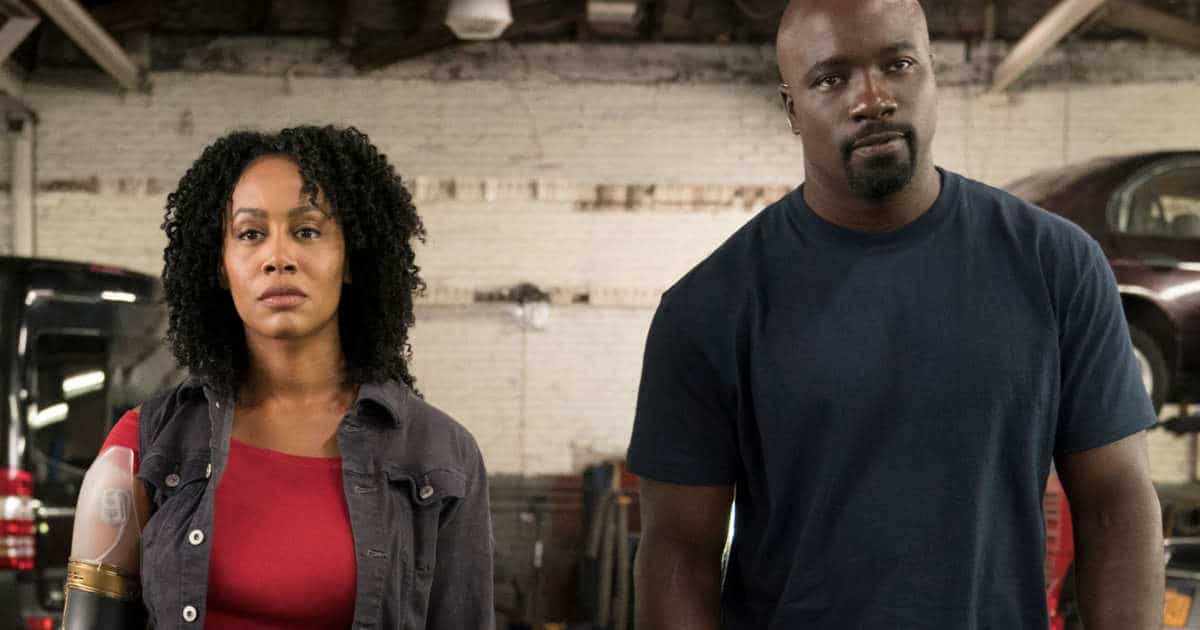
Another such scene happens at the end of episode three, “Wig Out,” during an argument between Luke Cage (Mike Colter) and Claire (Rosario Dawson). Their fight covers a lot of ground: Luke’s desire to protect Claire by annexing her from his life as a superhero, his contradictory feelings over being a brand as much as a hero for Harlem, their unique experiences with racism, her experience witnessing domestic violence as a child, and his refusal to make amends with his reverend father, James Lucas (played with fierce brio by the late Reg E. Cathey). It ends abruptly when Luke, in anger, punches a hole in the wall, frightening Claire and effectively ending her interest in the relationship.
Ad
Luke Cage is best in moments like this. When conversations take sudden emotional turns, characters act messily and screw up in ways that tilt the story in a new direction. In other words, they come across as human beings, and Luke Cage is stronger in its second season by making the emotional lives of these characters so clear. If the first season constructed Luke Cage as a symbol, the second charts the contradictions of who he is as a man.
But the writers struggle to maintain their focus on humanity while also interweaving dense political ideas about immigration, intra-community strife, and racism. Although Luke is more complex, especially when he wrestles with his animosity toward his father and toys with profiting off of his superpowers, Mike Colter’s performance seems constricted by what I’ll call the Sidney Poitier Effect: when black actors and characters come across as stilted, flawless specimens, as a by-product of needing to refute any and every racist argument against the community as a whole. They’re perfect, but not exactly interesting. (T’Challa in Black Panther falls into this category as well.) After the introduction of the season’s main villain, Bushmaster (Mustafa Shakir), a Jamaican criminal who sees ruling Harlem as his birthright and gains enhanced agility and strength thanks to an Obeah ritual, Luke and his new rival are used as a lens to touch on intra-community issues between African-Americans and black immigrants. It’s a subject that the show struggles to give much humanity, especially when Bushmaster’s Obeah rituals vilify the spiritual practice. Bushmaster works best when he drops the bravado and reveals the hurt underneath, and Luke feels similarly tinged whenever he’s guided by his contradictory emotions. Both are most intriguing when they speak to the way men are raised to absorb trauma, then re-inflict it onto the world rather than heal.
Click here to view original web page at www.vulture.com


