

When Game Night arrived in theaters in February carrying the tagline “From the guys who brought you Horrible Bosses,” there was almost nothing to suggest the R-rated comedy-thriller would be much more than a lowest-common-denominator romp, or worse, a bomb in the making.
Its late winter release frame — typically Hollywood’s dumping ground for presumptive money losers — suggested the film had something less than the full faith of distributor New Line Cinema. Then there was Game Night’s provenance: Based on a script by Mark Perez (Herbie: Fully Loaded, The Country Bears), the project had languished in development hell for four years only to be picked up and dusted off by co-directors John Francis Daley and Jonathan Goldstein (the writers behind Horrible Bosses, its sequel, and Spider-Man: Homecoming) whose maiden directorial effort, a reboot of National Lampoon’s Vacation, had been mauled by critics three years earlier.
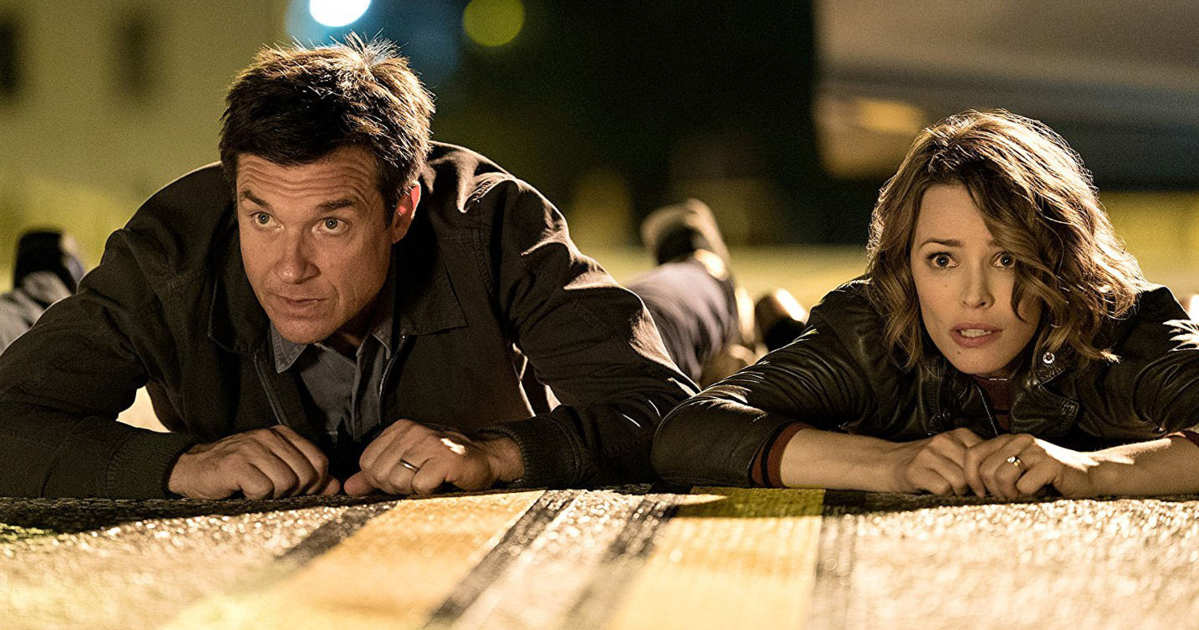
But a funny thing happened on the way to movie oblivion: Game Night earned a raft of glowing reviews for its whip-smart script, energetic performances, and deliberate avoidance of modern comedy’s ubiquitous tropes. Starring Jason Bateman and Rachel McAdams as a hypercompetitive suburban couple striving to conceive a child — but plowing more of their energy into Tostitos-and-Pinot Grigio get-togethers, where they play Pictionary and Trivial Pursuit with a group of similarly game-loving pals — the film is plotted around the kidnapping of Bateman’s character’s rich asshole brother (Kyle Chandler), which the sextet of gamers mistake for an absurdly realistic role-playing game. The movie feels experimental, chockablock with arty production design and ominous electronic music cues; every joke seems polished to a high-gloss sheen; even smaller supporting characters arrive onscreen with fully fleshed back stories. The upshot? Positive word of mouth helped turn the $37 million movie into a respectable slow-burn hit, grossing $117.1 million worldwide.
Perez retains sole screenwriting credit on Game Night (which came out digitally and on DVD last month) mainly because Writers Guild of America rules pertaining to when a director rewrites another writer’s work make it exceedingly difficult to reassign or share “screenplay by” credit. But Daley and Goldstein now admit they rewrote almost all of the original script’s dialogue, totally overhauled the characters — most notably a creepy cop portrayed by Jesse Plemons — and comprehensively reworked the original script’s third act, all in the service of providing an alternative to the prevailing M.O. in mainstream comedy. While never mentioning Judd Apatow or Seth Rogen by name, the filmmakers steered clear of those writer-directors’ signature brand of unscripted, ad-lib-heavy comic set pieces, in pursuit of something more carefully constructed.
“I think there’s a bit of fatigue for audiences in this kind of off-the-cuff style of comedic filmmaking where it all feels improvised and there doesn’t seem to be a solid direction,” Daley tells Vulture. “This was kind of our response to that. We’re a throwback, if you will, to the days where comedies were crafted.”
“Part of the fun of this — part of the challenge — was to try to keep the audience uncertain of what the movie is,” Goldstein adds. “What genre is it? Am I supposed to be laughing? Am I supposed to be … uneasy?”
Game Night first took form in 2013, with producer John Fox approaching Perez with the humblest kernel of a pitch. “He called me up and goes: ‘Game Night.’ I was like, ‘Fuck, that is a good title!’” the writer recalls. “He didn’t have an idea, really. But he’s like, ‘What if everybody got together and something happens over a summer?’ I sat with it for 30 minutes. I’m like, ‘No, it happens over one night. What if it’s a murder-mystery party, everyone thinks it’s fake, but someone actually gets killed?’ He’s like, ‘That’s it!’”
Perez wrote the lead male role with Bateman specifically in mind (his character was named Jason in the original draft), and his script ultimately compelled the actor to sign onto the project as a producer. Six months later, Game Night was bought by New Line, where it languished for the next four years while Bateman hired a roundelay of other writers to take a crack at the material and even considered directing the project himself. The Warner Bros. subsidiary had distributed Daley and Goldstein’s hit Horrible Bosses films (in which Bateman stars) as well as their version of Vacation, and offered the duo the opportunity to direct another movie in 2016. Presented the choice of several scripts in various stages of development there, the filmmakers gravitated toward Game Night, but would only agree to board the project if Bateman allowed them to rewrite and direct it. “We saw the potential to do a movie that could cross genres,” Goldstein says. “We really wanted to push ourselves to aim for something that was not a typical comedy, but lived in the zone of both comedy and thriller.”
“We also knew there was a bad version of this movie that could exist,” Daley says.
To head off that bad version, the directors set about deconstructing every aspect of the original script. “We changed the characters pretty considerably, we changed the third act almost entirely,” says Goldstein. “Because it was important to us that this thing have a clear, thriller movie story line, we sort of broke down every plot point and made sure it all hung together.”
“I would say 99.9 percent of the dialogue changed,” adds Daley. “Gary the cop was a loudmouth brash asshole in the original draft. We turned him into this strange, polite, overly articulate weirdo.”
“Billy’s character was a dumb jock who was really good at playing beer pong, so there’s a beer pong thing in the original draft,” Goldstein says. “There was a muscle-bound boss character who we eliminated entirely.”
“I think the approach in the earlier draft was to not worry as much about the underlying plot and care more about how these characters were reacting to it,” says Daley. “But we felt that did a disservice to the characters. We wanted there to be a consistent through line that audiences could look back and see. ‘Oh, it all tracks and makes sense.’”
(Excerpt) Read More at: Vulture.com