
In the Coen brothers’ Hollywood satire Hail, Caesar!, Frances McDormand commands a short but memorable scene. Her character, film editor C.C. Calhoun, sits alone in a cramped, dark room filled with cigarette smoke, each exhale illuminated by the light projected by the flatbed editor.
With a cigarette between her lips and a grease pencil tucked behind her ear, she splices and dices dailies with unmatched intensity. It’s an easy scene to miss, but it’s rare enough of an image that it’s difficult to forget. And despite today’s industry statistics, it’s exactly what an editing room looked like during the Golden Age of Hollywood.
While many categories were predominantly occupied by men, a quick glance at the Academy of Motion Picture Arts and Sciences list of editor nominees shows that women competed for the golden statue more than 20 times during the Golden Age. British-born film editor Anne V. Coates, who passed away in May at 92 years old, was nominated five times, winning her first year for David Lean’s Lawrence of Arabia in 1963. Coates was part of a lineage of female editors like Barbara McLean and Viola Lawrence, women who quite literally shaped the industry. In an interview with Walter Murch, Coates humorously reflected on how women were able to occupy the pivotal filmmaking role: “I was taught, or I must have heard it somewhere, that as it became a more important job, men started to get in on it. While it was just a background job, they let the women do it. But when people realized how interesting and creative editing could be, then the men elbowed the women out of the way and kind of took over.”
Ad
Despite the number of female editors during the Golden Age, these women have been largely forgotten as the industry has progressed — partly because the editing room is often a secluded one, and partly because women’s histories repeatedly become secondary to their male counterparts’. To celebrate Coates and the female editors who came before her, here are 25 Golden Age classics that spotlight their contributions to film and its history.
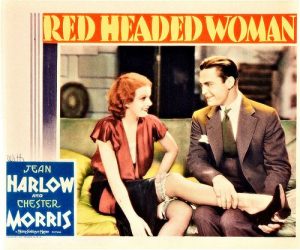
Red-Headed Woman, 1932, Edited by Blanche Sewell
Everyone from Barbara Stanwyck to Greta Garbo to Clara Bow was considered to lead this racy pre-code comedy. But it was Jean Harlow who won out in the end. Harlow, who covered her signature platinum-blonde hair with a red wig, stars as Lil “Red” Andrews, a secretary with eyes only for her boss, William. Despite being married and the son of a prominent figure, William falls prey to Red’s ways and soon the two are entwined in a destructive web. The fiery romance likely wouldn’t have gained such universal praise had it not been for editor Blanche Sewell, whose quick cuts ultimately delivered emotional snap.
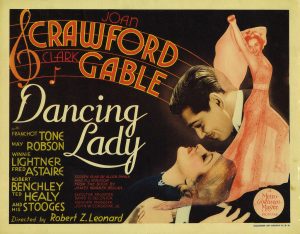
Dancing Lady, 1933, Edited by Margaret Booth
Margaret Booth edited this sharp, rags-to-riches pre-code musical, which reestablished Crawford’s place in Hollywood and marked the motion-picture debut of acclaimed dancer Fred Astaire. Joan Crawford stars as Janie Barlow, who dreams of Broadway while working at a nightclub. Her dream comes true when millionaire Tod Newton, played by Crawford’s eventual husband Franchot Tone, walks in the door. When the nightclub gets raided, the two become acquainted, and soon Tod is giving her money and secretly funding a production that will give Janie her big break. Tensions rise when Tod notices Janie’s flirtatious behavior toward her director, Patch Gallagher (Clark Gable). Sewell’s timely edits spotlighted both Astaire’s precise footwork and Crawford’s charm.
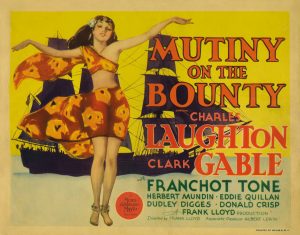
Mutiny on the Bounty, 1935, Edited by Margaret Booth
Margaret Booth edited this other Franchot Tone and Clark Gable feature, as well. But the difference between Dancing Lady and Mutiny on the Bounty is that Booth earned an Academy Award nomination for the latter. Mutiny on the Bounty takes place on the HMS Bounty, a ship headed to Tahiti run by a tyrannical captain, William Bligh (Charles Laughton). It’s a chaotic journey made worse by Fletcher Christian (Gable), who’s just as hot-headed as Bligh is. Hungry, tired, and worn down by the sea, the crew joins Christian in a mutiny against Bligh. But their victory is met with consequences.
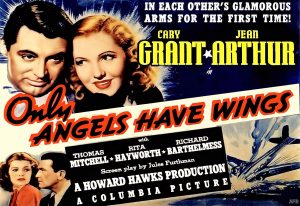
Only Angels Have Wings, 1939, Edited by Viola Lawrence
As one of Columbia Studio’s lead editors, Viola Lawrence worked on a number of high-profile films, including Howard Hawks’s feature starring everyone from Cary Grant to Jean Arthur to a young Rita Hayworth. And true to Hawks’s interests, Only Angels Have Wings is an aviation movie fixed with pilots, drama, planes, and romance. When entertainer Bonnie Lee (Arthur) makes a stopover in Barranca, she meets Geoff Carter (Grant), a tough pilot running the local airline. Thanks to the Peruvian Andes setting, the weather is anything but pleasant. It’s Geoff’s job to make sure that every one of his planes lands safely for six months in order to get the mail subsidy. Bonnie and Geoff strike up a romance that is soon tested when Geoff comes face to face with an ex-lover, Judy MacPherson (Hayworth), and a dangerous flight mission of his own.
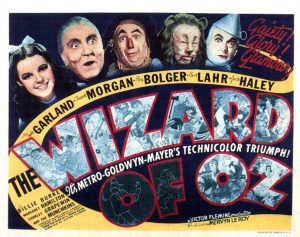
The Wizard of Oz, 1939, Edited by Blanche Sewell
In the hierarchy of Golden Age classics, The Wizard of Oz ranks next to films like Gone With the Wind and Casablanca. And it was editor Blanche Sewell who shaped this striking MGM fantasy with sharp cuts that heightened everything from the film’s action to its charm to its transition from black-and-white to color. Based on L. Frank Baum’s children’s book, The Wizard of Oz tells the story of one girl’s journey to find her way back home. After a Kansas storm sweeps her away, Dorothy (Judy Garland) awakens in Oz. With the help of unlikely friends, she sets off to find the wizard who can send her back home. Like all good fantasy stories, The Wizard of Oz is filled with narrative obstacles and character redemptions. This wholesome fairy tale about a girl who dreams in Technicolor continues to sweep viewers off their feet today.
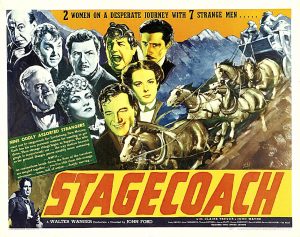
Stagecoach, 1939, Edited by Dorothy Spencer and Otho Lovering
Stagecoach was one of three films that editor Dorothy Spencer and director John Ford collaborated on. The film has all the makings of a classic Western: cowboys, a 19th-century Old West setting, a splash of romance — and of course, whitewashing and racism. John Wayne stars as the Ringo Kid, a prison escapee out for revenge who joins a stagecoach of people traveling from Arizona to New Mexico. The ride is less than smooth, and things get dicey when they come face-to-face with Hollywood’s racist imagining of Native Americans. Spencer’s carefully crafted edits that quickened the tempo and increased the film’s suspense, earned her, along with her editing partner Otho Lovering, an Academy Award nomination that year.
(Excerpt) Read More at: Vulture.com